

CKUT 90.3FM: All Things Campus featuring Building 21 Fellows

Link to the Official CKUT 90.3FM Episode here: https://ckut.ca/playlists/shows/29279
On April 27th 2026, fellows Firuza Huseynova (MA Digital Humanities), Nina Zepcan (MISt), Annette Hong Kim (MEd Inclusive Education), and Tamara Pressman (PhD Behavioural Economics) appeared on CKUT 90.3FM's All Things Campus, hosted by Karla Stephan.
The biggest thank you to everyone at CKUT 90.3FM for making this possible.
You can find the transcript below.

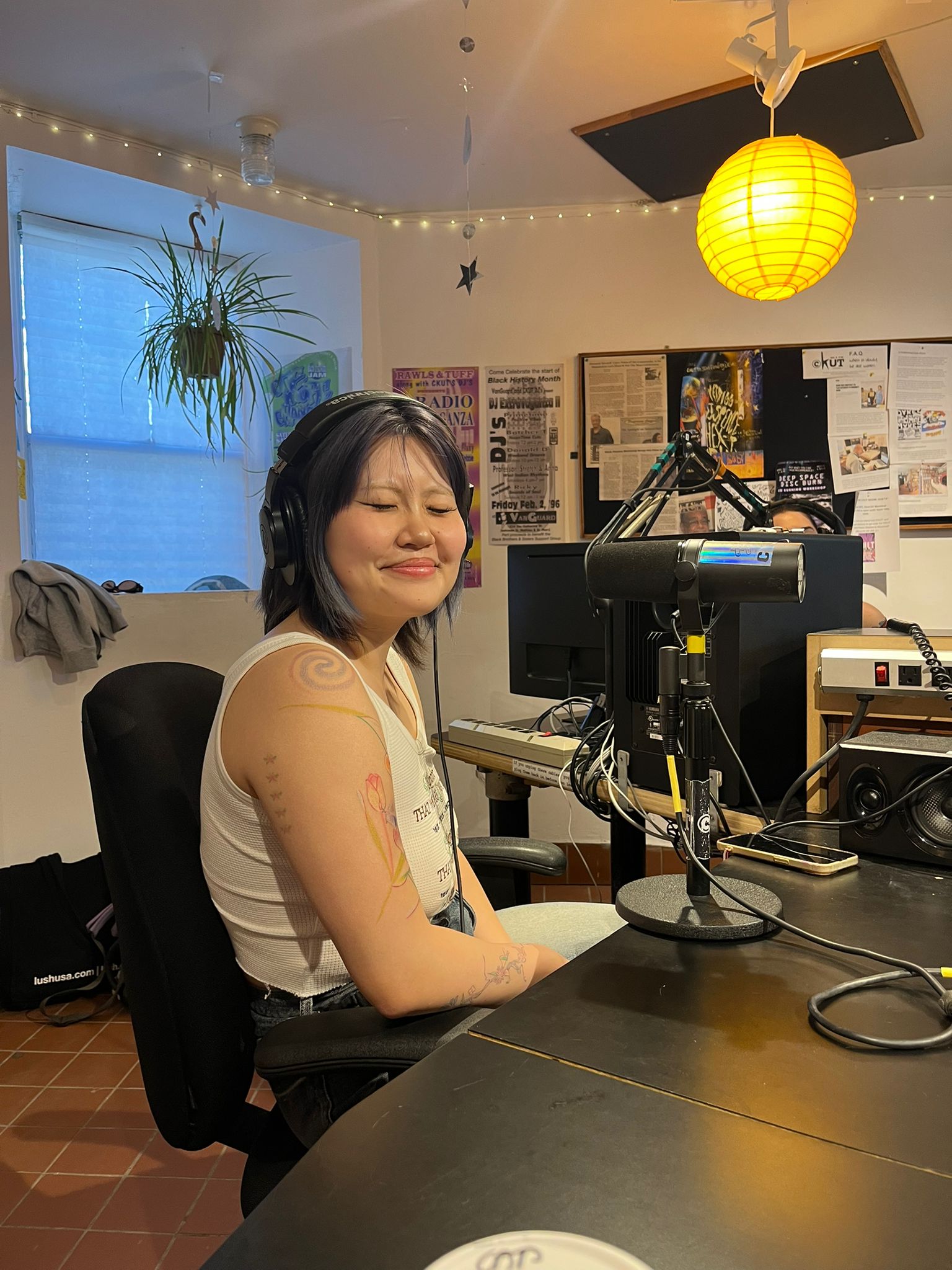

All Things Campus — CKUT 90.3 FM (04-27-2026 | 11:00–12:00)
Karla:
Hello, good morning. This is All Things Campus here on CKUT 90.3 FM. I'm your host, Karla, and we have a very special show today, which I’ll introduce in a second. But before we start: it’s currently 11:04 AM, it is 16 degrees outside and sunny—so that’s really something to celebrate. It’s going to be a high of 22, a low of 8, so make sure to get outside today, because I don’t know when we’re going to get a day like that again.
I will definitely be going straight to the park right after this.
Anyways, we’re going to get on with the show because we have very special guests with us today. We have Firuza, Annette, Tamara, and Nina, and they are here as representatives of Building 21. Building 21 is an interdisciplinary third space on campus for students to do research and explore ideas—usually things that are underfunded by the normal academic world.
So we’re going to hear a little bit about Building 21, and also about why we’re here today. Because unfortunately, Building 21 is being shut down by McGill, and we want to do everything that we can to prevent that from happening.
We’re going to hear from our guests about the importance of this space. I guess first we’ll go around and you can all introduce yourselves—your role at McGill, what you study—and then we’ll get into more details about Building 21.
---
Firuza:
I can start. My name is Firuza, and I am just finishing my Master’s in Digital Humanities at McGill.
---
Annette:
Hi, my name is Annette. I’m a Master’s student in Inclusive Education, and I’m doing mostly research work on marginalized and underserved communities regarding mental health and critical race theory.
---
Nina:
Beautiful. I’m Nina, and I’m doing my Master’s in Information Studies at McGill. I just finished my first year.
---
Tamara:
Big whoop. I’m Tamara, and I’m finishing my PhD in Economics in two weeks, pending defense—woohoo. I’m a behavioral economist and game theorist who mostly focuses on questions of trust and bargaining.
---
Karla:
Wow. Really all amazing, interesting things—and good things to look forward to in my journey of academia. I didn’t know any of these were options, but that sounds really cool.
So, do you guys want to tell us a little bit about Building 21—what it is—and then we can go into how you all play into that?
---
Firuza:
Yeah, I can start. Building 21 is—the way that we’ve been describing it—is like a third space. I’ve heard people talk about it as a safe haven for academics who maybe feel a bit confined in their own field and want to explore different interdisciplinary ideas outside of what is normally taught in academia.
Because especially at McGill, it can be very rigid. So Building 21 is both a program—it’s like a fellowship program—and a space. There’s a location, or there was a location, right at University and Sherbrooke—prime real estate. It was a beautiful, cozy house. An amazing place to just wander in when you’re in the area and see familiar faces.
Anything to add?
---
Nina:
Yeah. I’d also add that a lot of us are working on projects that aren’t our theses or aren’t necessarily in our programs, if we’re doing a non-thesis track. So the idea is that you’re working on a life project—something you’ve been sitting on for a while that isn’t necessarily accepted in one academic sphere.
It’s really just this great opportunity to deepen that and figure out how you want that to materialize. It’s really beautiful.
---
Karla:
Wow.
---
Annette:
Yeah, and I think one of the most beautiful things I found at Building 21 are the connections and the people. It’s really more than a physical space—it’s a place where we can share ideas, and people are just so passionate and genuine in the way they want to support each other.
I’ve had the most beautiful and insightful conversations with my Building 21 peers.
---
Karla:
That’s really cool.
---
Tamara:
Yeah, I think that’s the thing that was most striking for me. Especially coming from departments that thrive a bit more on a cutthroat culture—and on cutting people down to size—having a place where everyone is genuinely very nice.
I somehow think that was part of the selection process, though I have no idea how they did that from our proposals. It really feels like a safe space on campus.
---
Karla:
That’s really great. And it’s true—especially at McGill, it feels very rigid, like the different academic departments. I didn’t realize there was a space that allows for this kind of intersection.
Do you guys work with people from different departments within Building 21?
---
Nina:
Yeah, big time. I don’t think—there’s maybe one other person I know who’s in at least one of my courses.
---
Firuza:
Yeah.
---
Karla:
Nice.
---
Firuza:
I feel like all departments are represented. There’s a lot of people from cognitive science, but also economics, political science, sociology, communication studies—literally all programs.
---
Nina:
Also international students are accepted as well. So that’s really big in terms of meeting new people and branching outside one community.
---
Tamara:
It was really fun for me to present in a room that had no economists in it. Because that sensation of not having to justify the legitimacy of questions about norms or altruism—economists don’t love those concepts.
So being in a space where maybe the math wasn’t known by everyone, but the concepts were accepted as legitimate questions—that was brilliant.
---
Annette:
Yeah, and it’s not just graduate students. We also have undergraduates, postdocs, and staff from McGill. So it’s really an open space where you meet so many different people.
A lot of them work on projects that aren’t related to their field of study. It’s a lot of passion projects, which makes people more vulnerable and authentic.
---
Karla:
Like it’s not enforced by the upper academic sphere, which I think is really cool.
---
Annette:
Exactly. And one of the things our founding professor, Dr. Ollivier Dyens, said is that it’s a way to help students thrive by not grading them. That’s where we feel less pressure and can explore what we truly want—wear our heart on our sleeve.
It was truly a wonderful experience for me.
---
Karla:
Yeah.
---
Annette:
And it will still be.
---
Karla:
And can you tell me—and the people listening—a little bit about how you got involved with it? You said it was a fellowship program—did you have to apply? How did you find out about Building 21 in the first place?
---
Tamara:
Yeah, so for me, the administrator of the economics department sent an email about the call for applications for the fellowship. I thought it sounded really cool because the stuff that I do—so having then gotten into Building 21 and realizing how un-spicy my project was, it was really funny.
I was sitting there doing the application thinking, Oh my God, I’m so interdisciplinary. I’m so spicy. I’m so different. And then I got there…
So I did the application and got an email back a little while later. But I don’t think it was very well broadcast in the economics department. We all got the email, but then I spoke to some of my friends and they were like, “Wait, what is that? I’ve never heard of it.”
So I feel like now that McGill is shutting it down, all the promotion that I did is for nothing. But I was trying to encourage my colleagues to try it out and see how they could make their thinking more creative and original by meeting people outside of economics.
---
Nina:
Yeah, I also found out about it through the email chains in my department. You do have to pitch a project in your application.
At the time, I was already preparing a project I was pitching to a professor, and it was a little outlandish—which I think is what they were looking for. I knew it wasn’t something that could just be a final essay for a class.
So I really worked on how I could present it differently for the Building 21 application. It was something that connected my personal life, my previous degree, and my current degree. Figuring out how to talk about that was really important to me.
---
Annette:
Yeah, for me, I also learned about it through email chains—but mostly through friends who had done the fellowship before.
When I had to pitch my project, I asked myself: what’s a seed of an idea I’ve had, but couldn’t grow because of my environment? What’s something whimsical or even irrational?
I thought maybe this could be the space where those ideas could grow. I didn’t expect a response, but when I got one and met the program leads, I thought—wow, this is going to be amazing.
---
Karla:
Yeah.
---
Firuza:
I found it as a fluke. I was researching labs at McGill before coming here, and I didn’t really understand what Building 21 was from the website—it’s hard to explain.
It’s not like a typical lab where you work on one thing. It’s more like: you work on whatever you want. And I thought, “That’s weird.”
But I applied, got into the fellowship, and stuck around—even when I wasn’t officially part of it anymore—because I loved it so much. The people there are the best.
---
Karla:
Yeah, that’s awesome. So it’s truly your third space on campus.
And it’s inspiring to hear that your application required you to think of something out of your comfort zone—because that’s the opposite of what we’re usually asked to do.
Do you know how long Building 21 has been around?
---
Nina:
It’s been around for 9 years.
---
Karla:
Wow.
---
Nina:
Yeah, and it’s been in the same spot the whole time. That’s why it’s especially sad that they’re taking the building—it’s been a home for so long.
---
Tamara:
And the space really matters. It’s so homey and cozy.
---
Nina:
Yeah.
---
Tamara:
Economics is in the Leacock building—not the coziest place. So it was really nice to have somewhere on campus that felt pleasant, filled with pleasant people.
---
Nina:
It got to a point where we had to designate a locked room for working, because otherwise people would just talk. It would turn into conversations.
---
Karla:
I love that though.
---
Nina:
It’s very informal—just whatever people want to talk about. But then no one gets any work done, so we needed a quiet zone.
---
Karla:
That’s what you need, though—especially compared to most spaces at McGill. There’s not really a welcoming environment.
And if there is one, they’re shutting it down—which is really frustrating.
Do you think you could talk a bit about the projects you worked on at Building 21? I’m curious how they connect to your personal and academic lives.
---
Annette:
Yeah, I can start.
I explored diaspora grief and radical hope. I first learned about radical hope through a talk at McGill by Dr. George Yancy. He discussed how “hope” can sometimes maintain the status quo—telling racialized people that things will improve someday, but keeping them passive.
Radical hope, instead, is a rooted belief that what we do now leads to real change.
My project was a ritual and an altar that incorporated elements from my Korean background—like the myth of the nine-tailed fox and symbolic flowers like lilies.
I created a space for diaspora individuals who fear their stories won’t survive time—especially in a world shaped by political tension and capitalism.
The idea was to let participants communicate with a descendant from the year 3333. I wanted to flip the idea of ancestry—not just learning from ancestors, but asking: what can our descendants teach us?
---
Karla:
Wow.
---
Annette:
I built a physical altar using a shelf from Facebook Marketplace, with help from a friend. I added interactive elements—water, sound, and touch.
Using conductive technology, when you touch the water, it creates sound. The ritual allows participants to create a collective song, which they can save to their phone.
---
Karla:
That’s insane.
---
Annette:
Yeah—it was meant to engage all five senses.
---
Karla:
That’s so beautiful. And the idea of future ancestors—I’ve never thought of that.
Especially in diaspora, there’s often a disconnect with lineage. So this feels really powerful.
---
Annette:
Thank you.
---
Karla:
That’s incredible.
---
Tamara:
Sure. So, following that—you’ll see why, when I was applying, I thought I was so cool and edgy, and then I got there and there were future ancestors and altars…
I was like, “Oh—I’m very boring and repressed.”
So basically, my project was a continuation of my job market paper, which looked at ex-ante threats—how to force people to cooperate in a game scenario. I ran this game in Peru and in Canada.
Then I became interested in forward guidance in central banks—how they communicate expectations to the public. The linguistics of it—how they hedge uncertainty, use “dovish” or “hawkish” language.
So I thought: how can I combine these ideas?
I designed an experiment expanding my previous game, where participants could communicate through threats and messages before deciding how to share resources.
The great thing about Building 21 is—even though I couldn’t actually run the experiment (because that requires ethics approval and funding)—I could still model it mathematically, present it, and get feedback.
And not just from economists—people connected it to relationships, to marriage, to everyday life. Conversations that would never happen in an economics seminar.
---
Karla:
No, that’s still really cool. And it is interdisciplinary—it connects to communication, human behavior…
---
Tamara:
Yeah. I had computer science students suggesting ways to code it in Python—text analysis, pattern recognition. I can’t code, but the ideas were there.
---
Karla:
Do you think you’ll pursue it further?
---
Tamara:
I’d love to. My thesis supervisor said it’s “unrunnable” because of too many variables—but I’m not done with it yet.
---
Karla:
That’s exciting.
---
Nina:
Okay, I’ll go next—very tough act to follow.
My project connects a lot of personal elements—especially my dad. He’s a beekeeper, and growing up, he’d take us to see the bees and teach us about their societies.
He believes bees represent an ideal social structure.
He’s a Yugoslavian refugee from Bosnia, so that belief comes from a deeply socialist, agrarian worldview.
In my undergrad, I studied linguistics and anthropology, and we looked at non-human communication systems—including bees.
They have something called the waggle dance, a precise, almost mathematical movement used to communicate resource locations.
Then in my current degree in information studies, we studied organization systems—like databases and metadata.
So I started asking: what if bees themselves are an organizing system? Is their communication like metadata? Is it an input-output system?
That was my starting point.
But through Building 21, I realized this connects to artificial intelligence—especially ideas of collective intelligence or “hive mind” systems.
So I began exploring how technology mimics biological systems, and how we handle disruption compared to bees.
---
Karla:
Wow.
---
Nina:
Bees don’t ignore disruption—they adapt to it as a new reality. Humans, especially with AI, often resist or distort it.
I also looked at how AI contributes to inequality—especially in economic contexts—and how we might learn from biological systems to respond differently.
---
Karla:
That makes total sense. It connects biology, tech, politics…
---
Nina:
Yeah. For the final showcase, I made a video with voiceover—using clips from Bee Movie and other sources.
---
Karla:
Amazing.
---
Nina:
I also included family photos, articles on biomimicry, and examples like how mycelial networks (fungi) can map transportation systems more efficiently than humans.
---
Karla:
That’s wild.
---
Nina:
And I linked my project to others in the showcase—if you liked one idea, you could explore related ones. It created a network.
---
Tamara:
And that’s what was so cool—these presentations were all equally valid.
In our fields, you usually only have slides or a poster. Here, you could do anything.
---
Nina:
I literally dressed as a bee.
---
Karla:
I love that.
---
Tamara:
Try doing that at an economics conference.
---
Karla:
Yeah, that wouldn’t go over well.
---
Firuza:
I love hearing everyone’s projects. It really shows the range—from nature to technology to future speculation.
One of my projects explored memes and art.
I grew up very online, and for a long time I found it easier to communicate through memes than through language.
Memes are often seen as lowbrow, while art is considered highbrow. But I see memes as a form of folk art—containing distilled ideas or shared cultural understanding.
---
Karla:
That’s fascinating.
---
Firuza:
For my project, I made a video pairing memes with works of art, alongside voiceover quotes from readings.
But honestly, the most valuable part was the conversations—weekly “lightning talks” where we shared ideas and got feedback.
That’s where the real connections happened.
---
Karla:
Yeah—that kind of dialogue is so rare.
---
Firuza:
Exactly. And the final output doesn’t have to be a formal academic paper—it can be anything.
---
Karla:
That’s so refreshing. Especially for something like memes—it’s hard to capture that in academic language.
---
Firuza:
Totally. There’s so much unspoken cultural context.
---
Karla:
Yeah. And having people from different backgrounds contribute to your thinking must be huge.
---
Firuza:
Absolutely.
---
Karla:
That space sounds so necessary—and so unique. It really sucks that we’re having this conversation after hearing all these amazing projects, only to then talk about it being shut down.
I’m graduating my undergrad this year, and I’m going into a Master’s in Communications and Media and Culture—and I’m like, wow, I wish there was a space like this. It sounds exactly like what we need, especially now in the age of AI and overproduction.
---
Annette:
Yeah—and I don’t think there’s another space like this at McGill. Or even in academia.
I can give feedback to peers using tarot cards, and no one makes me feel small for it.
I had a friend working on nostalgia, and there’s a tarot card—the Six of Cups—that represents nostalgia. I used that in a lightning talk as feedback.
---
Karla:
That’s amazing.
---
Annette:
And no one belittled me. That’s rare.
Even if this space is being shut down, I believe we can create these spaces anywhere.
---
Karla:
Yeah.
---
Nina:
Ollivier’s wife said that Building 21 is an idea—it’s not just a place.
Even without the building, the thinking continues.
---
Tamara:
But the loss still matters. In economics seminars, you present work and people attack it—“Where’s the data? Why this model?”
At Building 21, people said, “That’s interesting—have you thought about this?”
They wanted to help, not tear you down.
That changes everything.
---
Karla:
Yeah—people don’t speak up in class because they’re afraid of being wrong.
---
Tamara:
Exactly. And that fear continues into graduate school. You feel like your work has to be perfect before sharing it—but it never is.
At Building 21, you could present something held together with duct tape and still be taken seriously.
---
Karla:
That’s so important.
---
Annette:
And the trust people have in you—it changes your self-esteem.
You’re allowed to dream. That’s rare.
---
Karla:
Yeah.
---
Annette:
This semester was about dreaming—and seeing those dreams come to life.
---
Firuza:
And there’s no wrong way to do your project. You can pivot, change direction—nothing is “wrong.”
---
Karla:
That’s so refreshing.
So, can you talk about what’s happening now? Why is the space being shut down?
---
Firuza:
Not to name names—it’s McGill administration and budget cuts. This has been a recurring threat.
Last year, we managed to keep it open through fundraising, but this year it’s final. As of April 30, the building will be closed.
---
Karla:
That’s so soon.
---
Firuza:
Yeah. There’s more information at change.org/building21. Right now, we’re trying to figure out what the future looks like.
There’s a large community of alumni and supporters who want to continue this.
---
Karla:
Do you think there’s a path forward?
---
Firuza:
Loose plans, but nothing concrete yet.
---
Annette:
We’re hoping to expand beyond McGill—maybe across Montreal—and make it more accessible.
---
Nina:
There are individual efforts—writing articles, starting online platforms. I’m thinking of creating something like a Substack to continue my project.
A lot of us want to keep Building 21 alive through our work.
---
Tamara:
And it’s especially important now. In economics, people are talking about the “end” of empirical research because AI can do it faster.
So what matters now is originality. And spaces like this foster original thinking.
---
Karla:
So it’s the opposite of what McGill should be doing.
---
Tamara:
Exactly.
---
Annette:
This has been the best experience I’ve had at McGill. It creates real relationships.
In large classes, people just leave—you don’t connect.
---
Karla:
Yeah.
---
Annette:
We’re also trying to stay active on social media—TikTok, Instagram.
---
Karla:
Do you want to share the account?
---
Annette:
Yes—@building21.ca.
---
Tamara:
Please follow, share—do anything.
---
Karla:
Is there anything people can do to help?
---
Nina:
Signing the petition is a big one. (change.org/building21)
---
Annette:
And following updates—we’ll share what comes next.
---
Tamara:
And if anyone has a billion dollars…
---
Karla:
Please donate.
---
Tamara:
Yes, absolve your guilt.
---
Karla:
Hopefully someone’s listening.
Do you want to leave listeners with any final thoughts?
---
Annette:
This was life-changing. It gave me radical hope. I’ll carry this experience with me forever.
---
Firuza:
There are no places in academia for “irrational” ideas—but those are where breakthroughs come from.
If you want meaningful knowledge, you need spaces like this.
---
Tamara:
If you want groundbreaking research, you have to let people explore crazy ideas.
---
Nina:
Even if you weren’t part of Building 21—keep going. Express your ideas however you can.
---
Annette:
Talk to your ancestors. Talk to your descendants.
---
Karla:
Thank you all so much for being here and sharing your stories.
This has been All Things Campus. I’m your host, Karla.
McGill—if you’re listening—you can’t stop people from thinking creatively.
---
Annette:
They can’t stop us.
---
Karla:
Thanks for listening. Bye.
---
All:
Bye.
.svg)