



When Nations Become Networks: Rethinking Human Agency in Agentic Infrastructures
As artificial intelligence becomes embedded within critical infrastructures, such as transportation systems, energy grids, food supply chains, and communication networks, these systems are increasingly shaped by agentic AI: interactive software agents that perceive, plan, coordinate, and take action across complex environments. This project examines how the rise of agentic coordination in critical infrastructure may reshape legal responsibility, cybersecurity risk, and responsible AI governance as societies move toward 2050 and beyond. It focuses on how public power and human agency are transformed when essential services are mediated not only by automated systems, but also by goal-directed agents that can initiate decisions and interventions beyond continuous human oversight.
At the intersection of law, cybersecurity, responsible AI, and critical infrastructure protection, the project analyzes how agentic infrastructures introduce new governance challenges. These include diffuse accountability across distributed chains of action, reduced transparency as decisions emerge from multi-agent interactions, and heightened exposure to systemic and cascading failures, including cyber-enabled disruption. As infrastructures increasingly optimize for resilience, efficiency, and stability through agentic coordination, established legal concepts such as duty of care, institutional liability, and democratic oversight may no longer align with where operational decisions are actually made, especially when inter-agent trust, identity, and authorization become critical points of failure.
Rather than advancing immediate regulatory prescriptions, the project adopts a forward-looking and conceptual approach to assess long-term societal consequences. It explores how legal frameworks, cybersecurity governance models, and responsible AI principles may need to evolve to preserve meaningful human agency, public trust, and rights-based accountability in environments where infrastructures transition from passive technical assets to agentic participants in governance. Through conceptual analysis and scenario-based exploration, the project aims to contribute to emerging debates on how societies can maintain legitimacy and human-centered control as agentic infrastructures increasingly shape collective life.
Presentation and dissemination
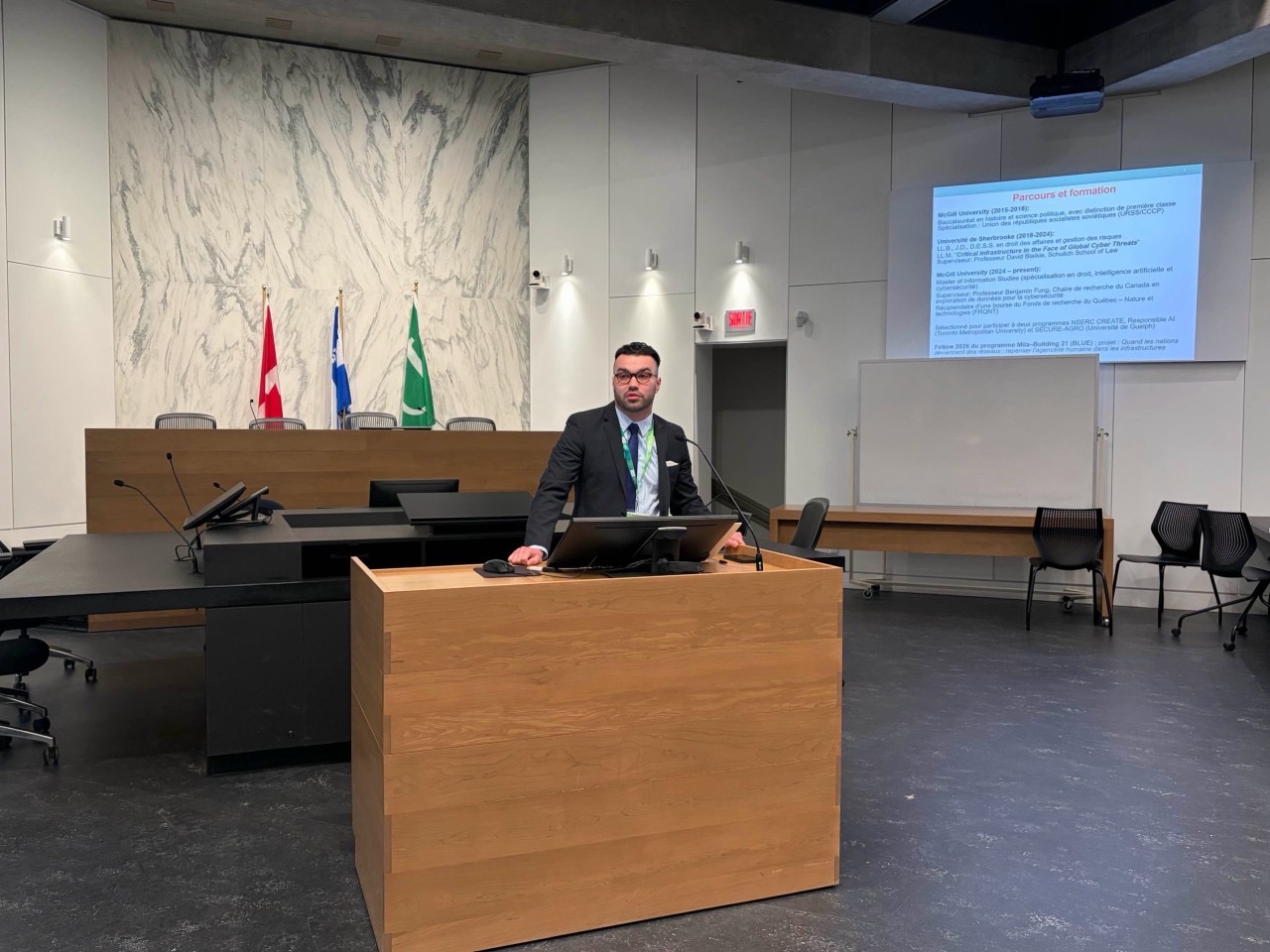
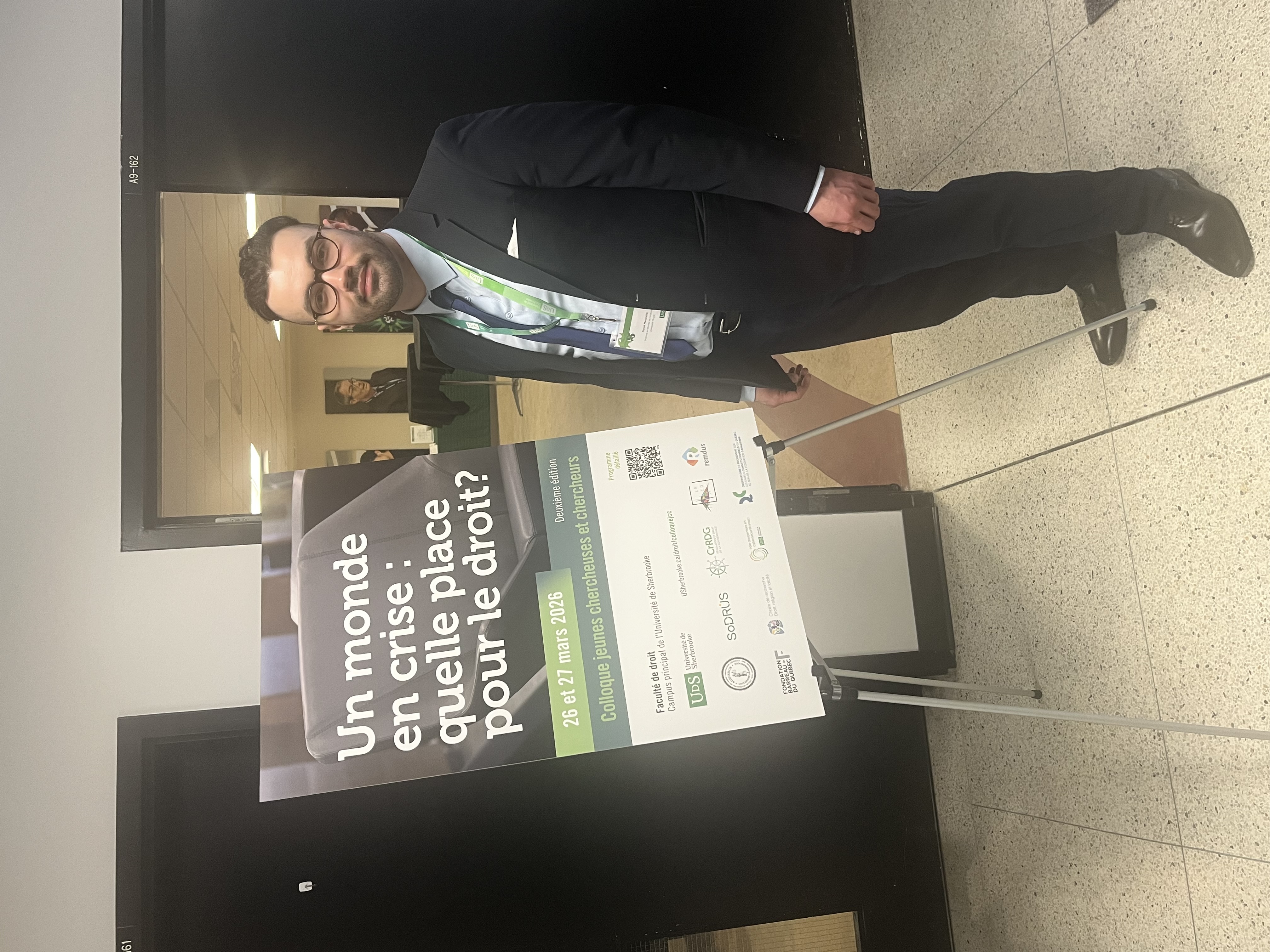
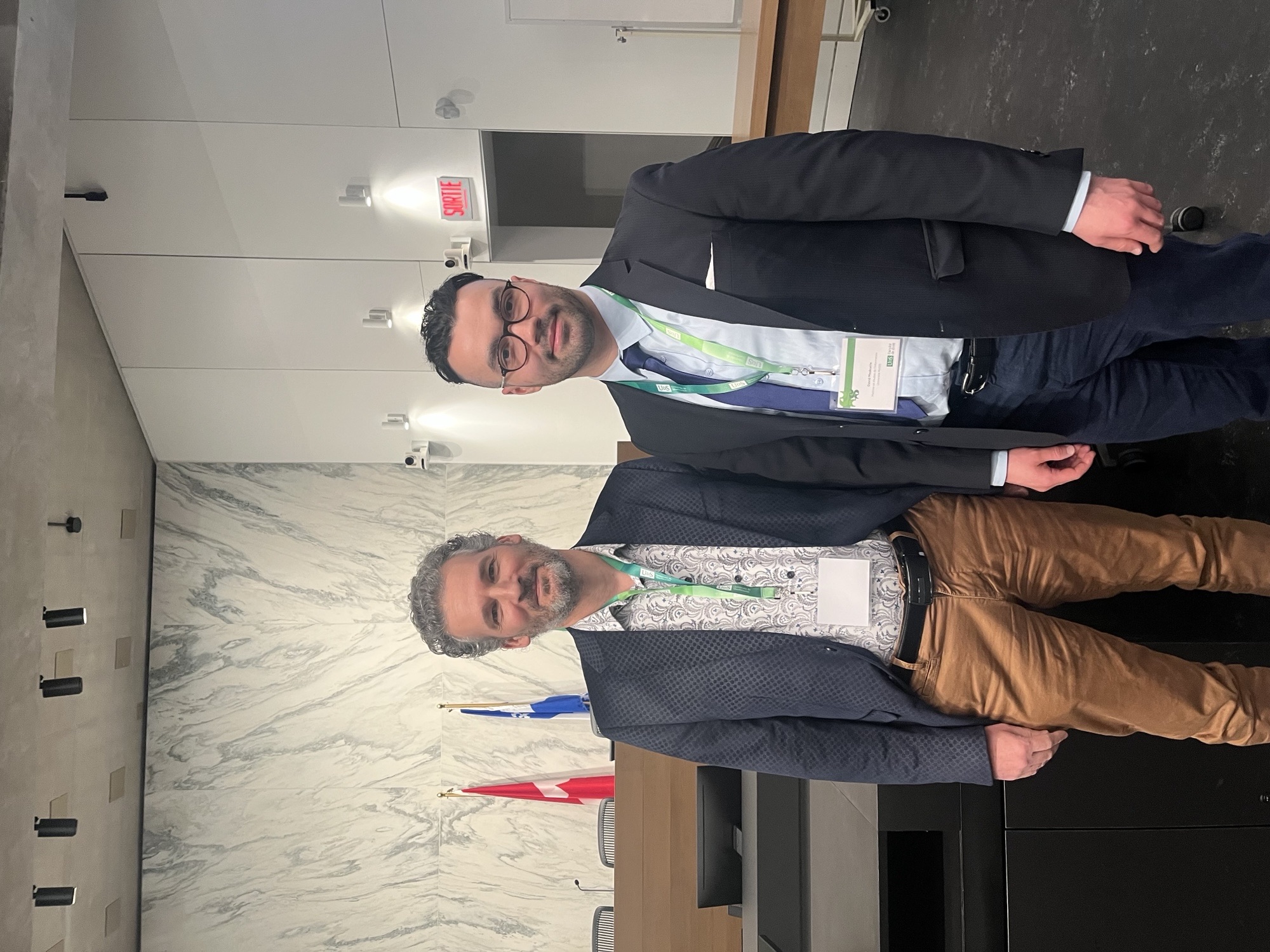
David has presented this work across academic and interdisciplinary venues. At his alma mater, the Faculty of Law at the Université de Sherbrooke, he presented at the Colloque jeunes chercheuses et chercheurs, organized under the theme A World in Crisis: What Role Does Law Play? He spoke on the panel Digital Innovation and AI: What Role for Law?, where he delivered a presentation entitled AI in Critical Infrastructures: Rethinking Legal Responsibility in a Vulnerable World.
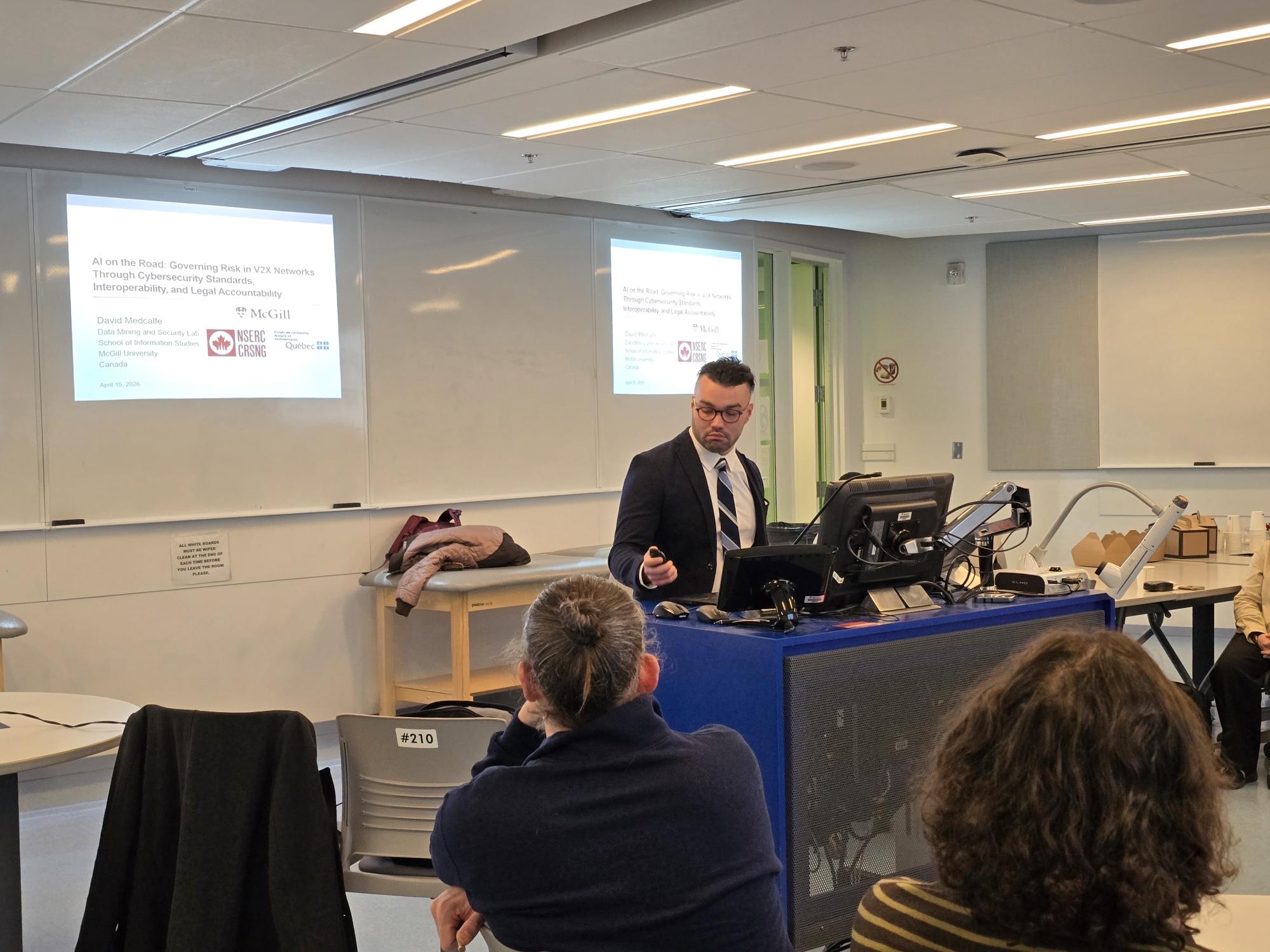
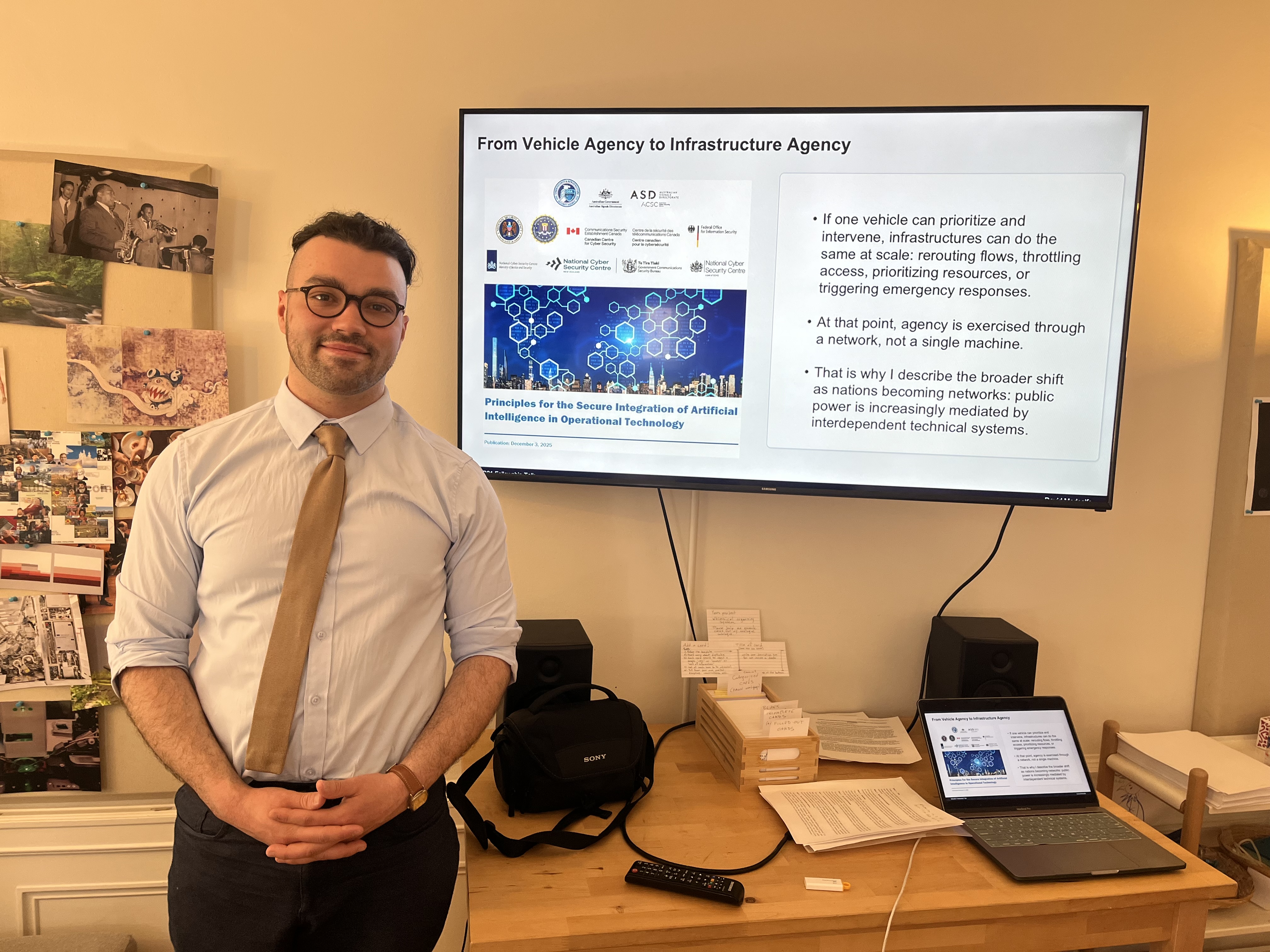
He has also presented this research within the McGill School of Information Studies as part of the presentation of graduate research conducted during his degree, as well as at Building 21, where he discussed its broader implications for legal responsibility, cybersecurity governance, and the preservation of human agency in increasingly agentic infrastructures.

Dedicated to Leila Alfaro (B21 Fellow, 2018), a fellow jurist whose generosity and curiosity have stayed with me since we first met through Model United Nations at Dawson College in 2013, alongside her husband Gabriel.




.svg)