

“But now, I am not eternal, but (I’m real)”: Rethinking the Democratic Poetics of Language in the Age of AI
How do we develop new ways of conceptualizing difference? To what extent does a failure of "grammar" and grammatical structures lead to failures of new ways of being, of new ways of thinking?
This project explores the tangible impacts of language in making and breaking the world that we share. Language shapes political realities not only through law and policy, but also through media and identity. Language is the basic grammatical structure through which the world is brought into existence. Many scholars critique the failing ideological frameworks of contemporary democracy as a symptom of the failures of language. Without a new way of thinking, they argue, there can be no new way of being. This connects to the inception point of this project: my re-encounter with the philosophy of Hannah Arendt. Arendt's writings on totalitarianism, propaganda, and democracy deeply enriched the theoretical scope of this project.

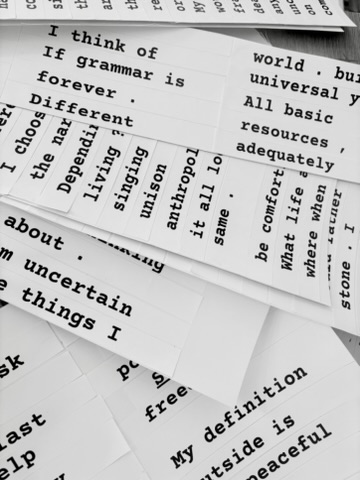
I hosted, as part of the development of this project, a roundtable discussion to try to answer the question, "Is TRUTH required for PROGRESS?" I led a discussion through the key works of Arendt within this context: Between Past and Future, The Human Condition, and The Origins of Totalitarianism. These pieces, as well as the insights from my peers' generous participation, influence my thinking profoundly and continue to inspire me. In order for the underlying critique of language to function, I knew this project had to be an experiment in democratic, pluralistic expression. It had to be an expression of, and a generation within, a living community discourse. It had to be a constantly unfolding process. A process that could only be observed in its falling apart and coming together again. I thought… what could be a more democratic expression of language than fridge poetry?
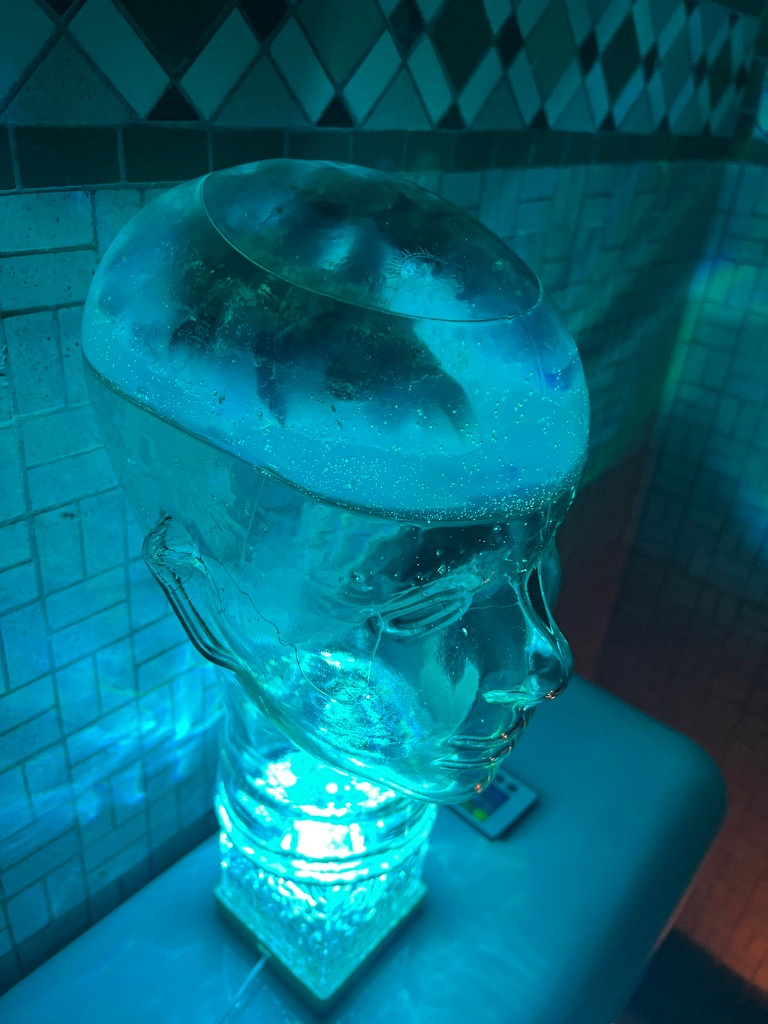
I would like to thank my brilliant, endlessly creative, and inspiring artistic collaborator, Julia Smith. Julia is a one-of-a-kind talent, whose generous spirit and love of the ocean were the beating heart of our shared project. Julia and I shared a concern for how representation shapes language, which shapes political realities, at the risk of perpetuating systems of violence and embodied harm. Our projects combined into a joint multimedia art installation titled "What is Water?" Water, like language, is both of and within us. Our installation facilitated an encounter with the ocean without falling into the tropes of either sublimity or monstrosity—but feeling the connectedness within the ordinary. We then asked the visitors to reflect on their experience using the words generated by B21 x Mila fellows over the course of several weeks.

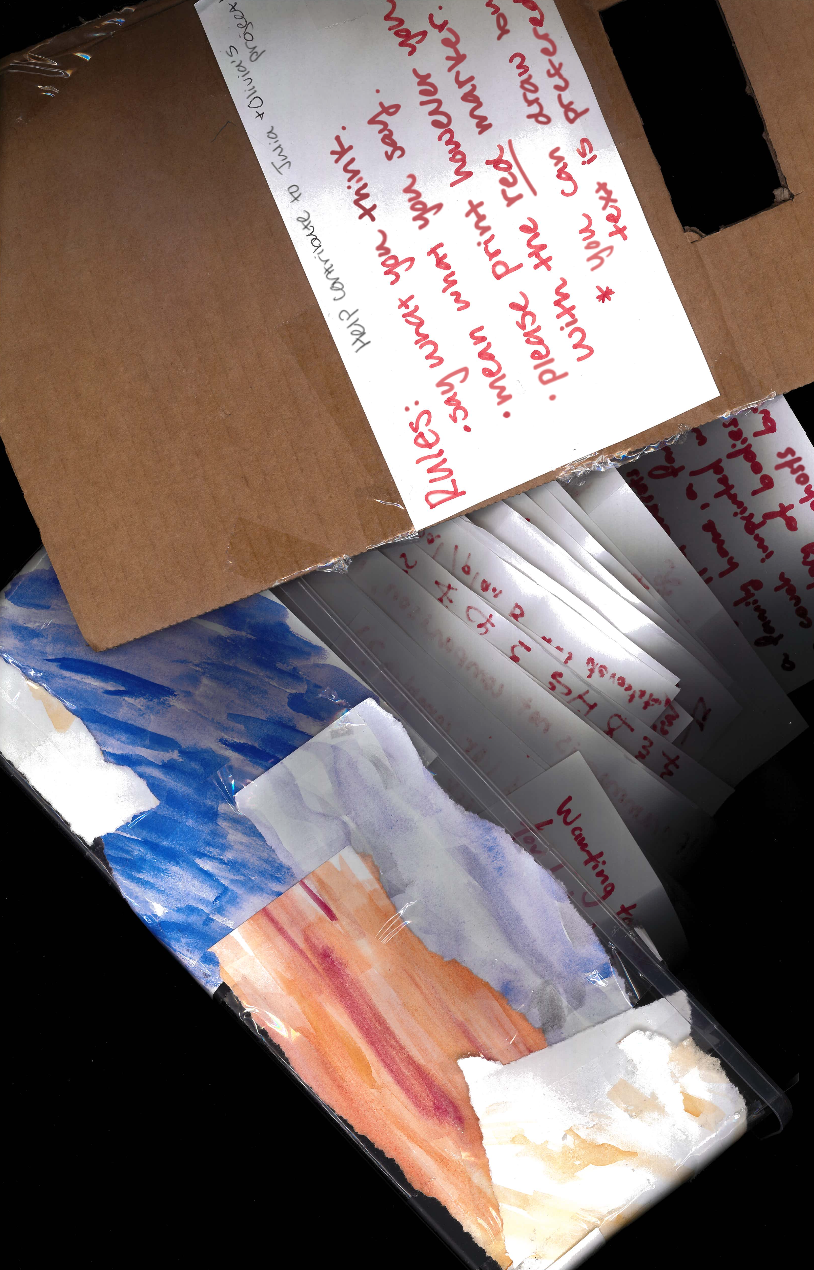
The language fragments on the wall were inspired by the form of fridge poetry. The fragments were collected from the responses of the community to three prompts.
- Describe utopia / a utopia
- Describe your experience of / an experience of uncertainty
- Propose a new "grammar of otherness."
The prompt-response substratum of the language fragments employed in the final project references the prompt-response encounter with an artificial intelligence language model. The opacity of the responses, and the reorganization of the language by many hands, acted as an analog language generation model. These responses determined the baseline possibilities of expression, which were reshaped and recontextualized within the context of the ocean.
Please enjoy this page as an artifact of the conceptual development of this project. A project, and a labour of love, that follows me, nourishes me, and drives me forward to heal the world through the healing of language.

Suggested Readings
Arendt, Hannah. "Chapter 11: The Totalitarian Movement." In The Origins of Totalitarianism. New York: Harcourt, Brace & World, 1951. pp. 341-388.
Arendt, Hannah. "Truth and Politics." In Between Past and Future: Eight Exercises in Political Thought. New York: Viking Press, 1968. pp. 227-264; and "Lying in Politics: Reflections on the Pentagon Papers" pp. 25-71.
Berkowitz, Roger. "On Fake Hannah Arendt Quotations." Amor Mundi (blog). Hannah Arendt Center at Bard College, August 4, 2024. https://hac.bard.edu/amor-mundi/on-fake-hannah-arendt-quotations-2024-08-04.
Berkowitz, Roger. "The Tyranny of Lies." Amor Mundi (blog). Hannah Arendt Center at Bard College, September 28, 2025. https://medium.com/amor-mundi/the-tyranny-of-lies-d58522ba28a3.
Photos




.svg)