


CAMBIATA (Counterpoint and MusicXML By Instructing AI Through APIs)
Can Large Language Models (LLMs) follow strict, formally specified rules when asked to produce structured creative output? CAMBIATA (Counterpoint and MusicXML By Instructing AI Through APIs) is a project that investigates this question in the domain of species counterpoint, a centuries-old discipline of Western music composition codified in Johann Joseph Fux’s 1725 treatise Gradus ad Parnassum, which contains pedagogical exercises for students.
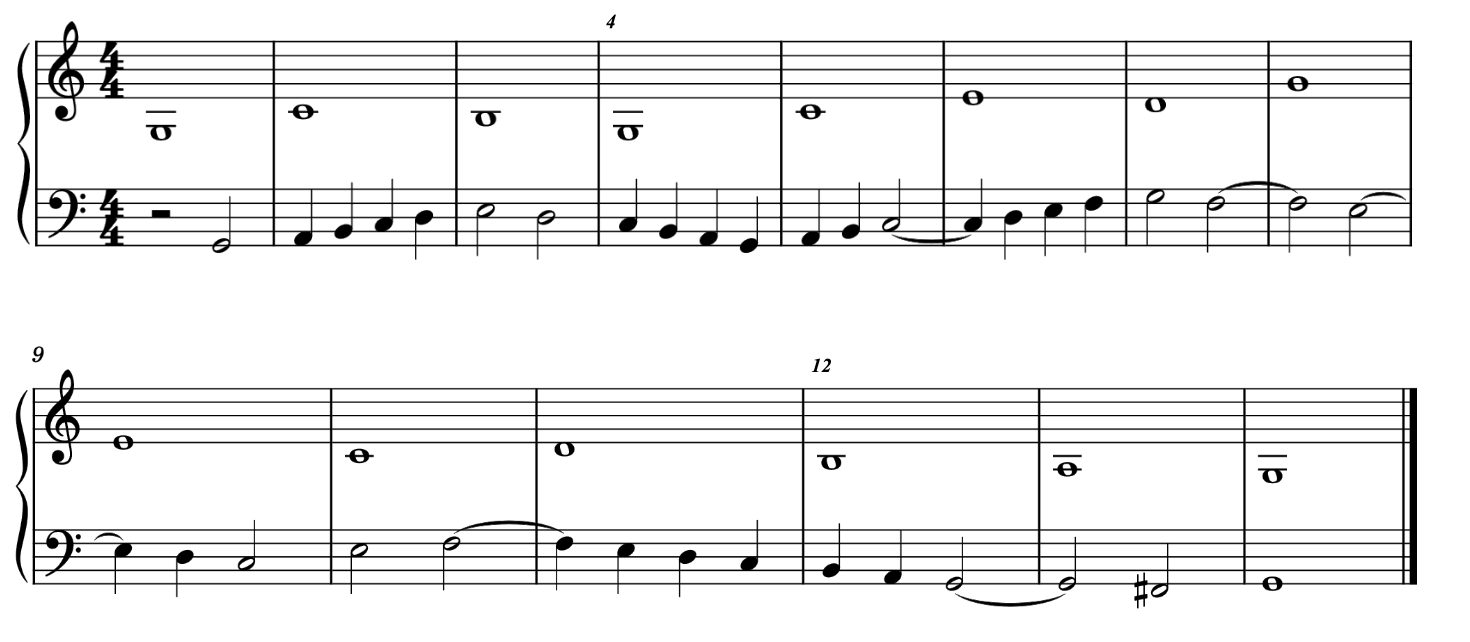
I built a system that delivers natural-language rule guides written by Pierre Basso to three LLMs (Claude Opus 4.6, GPT-5.3, and Gemini 3 Pro). The models read these guides and compose solutions to Fux’s exercises, returning them in a standard music-encoding format, which allows for automatic evaluation. While there is still room for improvement, the models demonstrated an understanding of counterpoint comparable to that of a human student. When given the upper melody as a starting point, GPT-5.3 produced the music below, which contains only two minor errors.
Newton Fractal Sonifier
Website: https://huggingface.co/spaces/liampond/newton-fractal-sonifier
Demo: https://youtu.be/04z1rFhPeWw?si=9K_TrKOXDNx40wLN
Code: https://github.com/liampond/newton-fractal-sonifier
The inspiration for this project comes from YouTube videos like this one, which zoom endlessly into a mathematical object called a fractal. Because fractals stay infinitely complex no matter how far you zoom in, the visuals can be hypnotic or even trance-like. Part of what makes fractals so striking, to me, is the simplicity of the equations behind them, the most famous being z² + c, which generates the Mandelbrot set shown in the linked video. In these videos, the music tends to match the mesmerizing atmosphere, but usually has no real connection to the math driving the image.
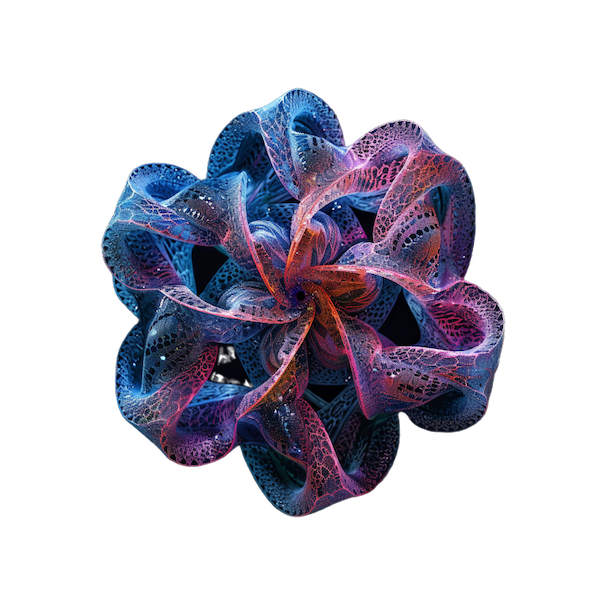
The Newton Fractal Sonifier is a web-based tool that uses a single equation to generate both the audio and the video. The fractal itself is built using Newton's method, a 17th-century root-finding algorithm developed by Sir Isaac Newton. The user supplies the polynomial that defines the fractal, then picks from a set of preset instruments or uploads their own. Each sound is mapped to a region of the fractal, represented by a colour. A small white circle at the center of the screen marks the region the program is "listening" to. As the camera zooms in, the program measures what fraction of that circle is taken up by each colour and uses those fractions to set the volume of each sound. If the circle is half blue and half purple, the blue and purple instruments play at equal volume. If it is mostly yellow, the yellow instrument dominates, meaning that as the image changes, the mix shifts with it. To mirror the visual effect of zooming in, the pitches follow an ascending series of Shepard tones, which are stacked octaves that create the auditory illusion of a pitch rising forever. The result is a piece where one equation creates the sounds you hear and the image you see.





.svg)