

Ocean Anomalies: An Al Media-Lab for Encountering the Mythologized Sea
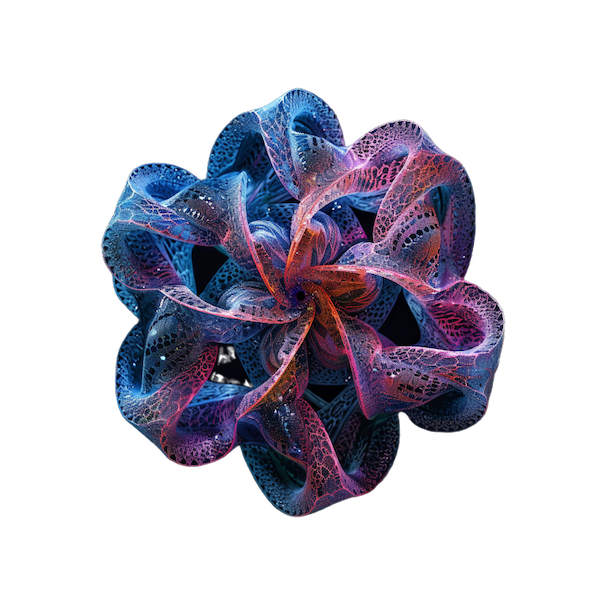
Investigating how media representations of the ocean enable exploitative military and environmental policies. The ocean we fear, desire, protect, and exploit is not the ocean itself. It is an image-ocean, a constructed artifact stitched together from tourism footage, climate graphics, colonial maritime paintings, sonar scans, and satellite spectra. Yet this media-ocean is so naturalized that we rarely notice its artificiality. The project asks: If Al can detect patterns across thousands of ocean images, can it expose the biases, blind spots, and aesthetic habits that shape our understanding of the sea? And can it help us encounter forms of oceanic being that exceed human comprehension altogether?
Ultimately, Ocean Anomalies investigates how Al can help us perceive the mediated oceans we have inherited and imagine stranger, more expansive oceans that might reshape our ecological imagination.
A Return to Water: Deconstructing the Spectacle of the Sea
Media shapes perception, ultimately shaping behavior and policy. Narratives of the ocean, as the ultimate terrestrial plane of othered existence, shape not only the cultural imaginary but also political realities. The ocean is often represented as a supernatural space rather than as a critical environment that regulates global temperatures, absorbs CO2, and releases oxygen for us to breathe. To deconstruct harmful ocean narratives, this project engages with several multimedia elements: video, visual art, and generative poetry.

The Video:
The aim of this project is to represent the ocean as it is in reality, rather than how we perceive it to be. Part of the installation is a projected video composed of unedited footage that I took scuba diving in Cabo Pulmo, Mexico and Utila, Honduras. The sounds are the sounds you would really hear underwater. The crackling comes from snapping shrimp and the melodic bellows that resemble the sound of wood creaking underfoot are excerpts from the conversations between blue and humpback whales. The human sounds are interview moments from my podcast series, What is Water, that felt particularly moving to me. Finally, the soundscape at the end are human responses to the question: what does the ocean sound like?
The Visual Art:
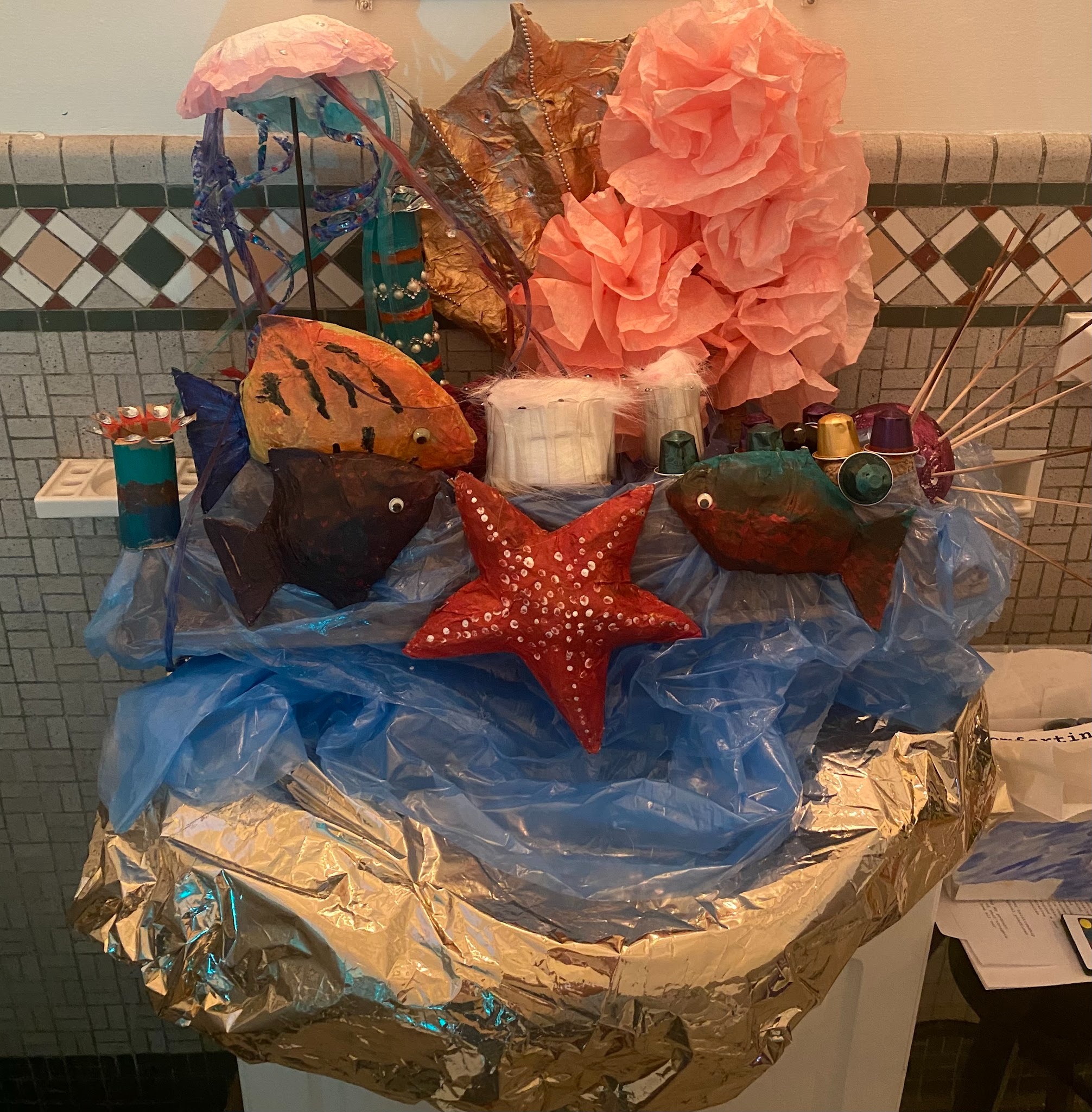
The coral reef is made entirely from trash as a way to think differently about the items we discard. Berry containers transform into sea anemones and pizza boxes find new lives as papier-mâche fish and coral. K-cups are now barnacles and water bottles are jellyfish tentacles. Even the ‘water’ and ‘sand’ derive from trash—a recycling bag and an old tablecloth. The intention here is to imagine new possibilities for our trash that all too often finds its way into the ocean and then ultimately into us.
From here, the second sculpture urges the viewer to think about how the ocean’s problems are our problems. The glass head, miraculously a secondhand find, contains a suspended silicone brain filled with bits of trash to open up this conversation.

Ocean and human, in water and amniotic fluid, are born out of the same elements: Na, K, and Cl. In life, we both come to be made of water and plastic.
The Generative Poetry:
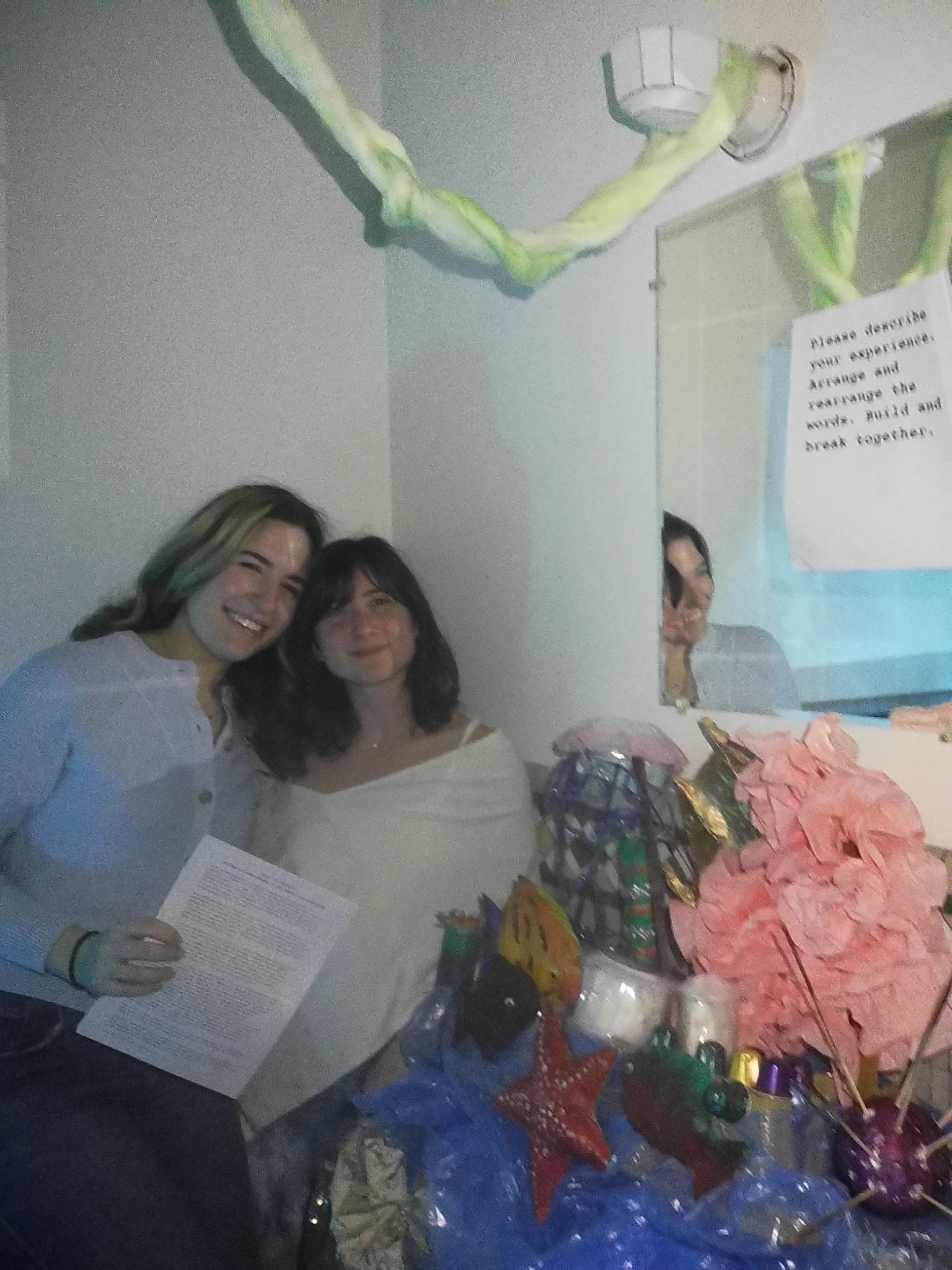
To be able to imagine new possibilities for our relationship with water, we must have the language for these imaginings. Like the base-molecular structures compose the body, so does our basic units of language compose narrative. Narratives of otherness transgress into political action and embodied realities. To deconstruct these harmful narratives, visitors are invited to engage with a form of generative poetry, more commonly thought of as fridge magnet poetry, to deconstruct language of otherness. The words transiently attached to the wall are the text generated by the Building 21 x MILA community in response to three questions:
1) Describe utopia/ a utopia
2) Describe your experience of/ an experience of uncertainty
3) propose a new “grammar of otherness”
Here, the visitor is asked to experiment with narrative structure, grammar, and meaning to imagine a new way to conceptualize difference as a politically radical act.

To Conclude:
The objective of this project is to encourage new ways of perceiving the ocean in an environmentally inaccessible space. This work, I hope, opens up alternative ways to think about our relationship with water that challenges extractivist and exploitative ecological practices. After all, we were all born underwater.
Thank you to everyone who contributed to this project including my podcast guests, B21 community, and especially my amazing co-creator, Olivia Buchbinder. All of your thoughts and suggestions proved invaluable in helping me make sense of how all our lived experiences are entangled in the ocean’s future. I would like to thank Olivia in particular who is able to see the potential and the beauty in the most abstract of ideas. Her brilliant ability to articulate complex theoretical concepts and imagine alternative realities is what truly brought this project to life.
P.S. wear reef-safe sunscreen!


.svg)