


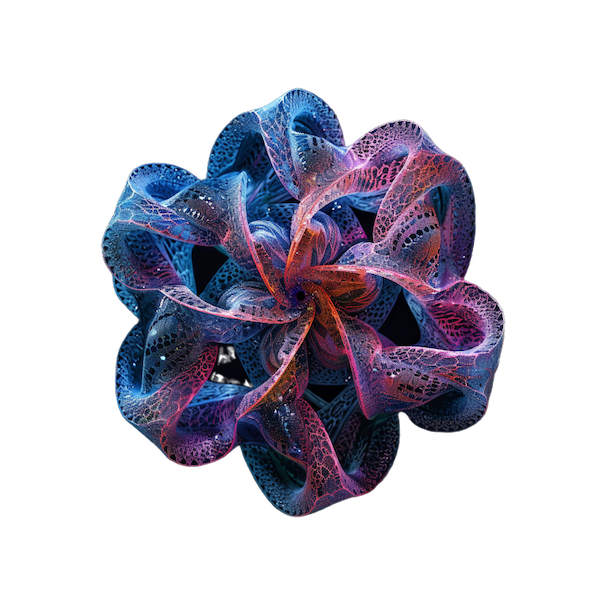
Philosophy of Biomaterial Design from The Perspective of Social Microbiology
The central idea is that biomaterials have been designed, and continue to be designed, for various purposes, mainly for use in implants or as replacements for human tissues and organs. The design philosophy involves addressing the challenges of using engineered—or even naturally derived—materials that can integrate into the human body without becoming a source of infection. If these materials are intended to replace whole organs, these objectives become especially critical.
Rather than relying on aggressive “kill-or-be-killed” strategies commonly used in biomaterial design, this concept aims to approach the problem from a different angle. The project is therefore divided into two sections. The first focuses on studying how natural body tissues behave when confronting pathogen invasion, as well as their mechanical behavior while carrying out daily functions. The second part of the project involves replicating these characteristics in biomaterials while making them more resilient.
To enhance resilience, it is necessary to consider how bacteria, viruses, and other microorganisms behave. Their nature does not appear to be solitary or solely programmed for reproduction and survival; rather, it is more strategic and collective. Microorganisms seek to survive in the most effective way possible, and this behavior may be comparable to the social structures observed in human societies. Humans have survived largely through social organization and collective action. Social microbiology is an emerging field that studies the behavior of pathogens(why, when and how) through sociological perspectives. Understanding and applying insights from this field could help in designing biomaterials that leverage the body’s natural defenses and structural strategies, thereby making pathogens unable—or less inclined—to attack or invade implants and biomaterials. My concept of this came from the fact that “Alchemy” in ancient times was supposedly able to separate impurities from the substances to make them pure. The idea was restructuring of the material itself that would expel the impurities. Understanding the nature of these agents or impurities can help in transmuting or otherwise designing biomaterials that can use both immune-modulatory and self-restructuring to reach the pure or perfect state. This is the current idea, and I hope to gain meaningful insights through this endeavor.
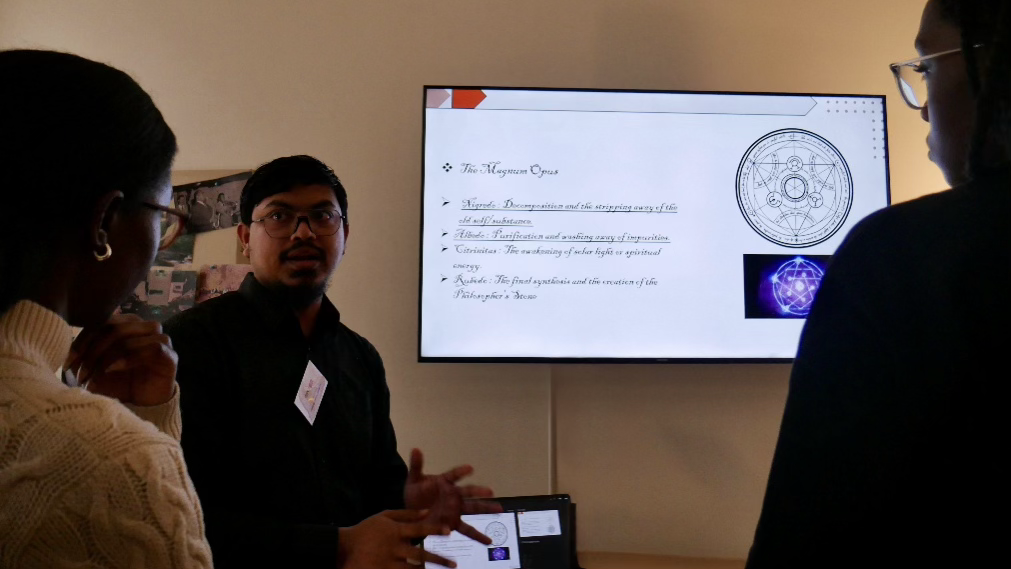
The wish to transmute to the best form through alchemy needs the Magnum Opus. My idea originated from the first two of the four Magnum Opus
- Nigredo: Decomposition and the stripping away of the old self/substance
- Albedo : Purification and washing away of impurities
- Citrinitas : The awakening of spiritual energy
- Rubedo : The final synthesis and the creation of the Philosopher's Stone.
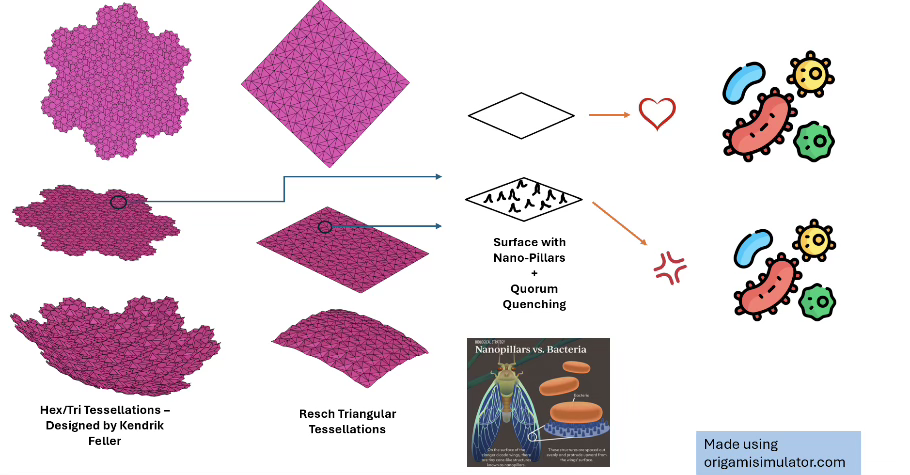
The “philosophy” was designing biomaterials that would force or discourage pathogens like bacteria, sort of pushing them away (Albedo) from attaching on the surface of the transplants or artificial organs through redesign at the structural level (Nigredo).
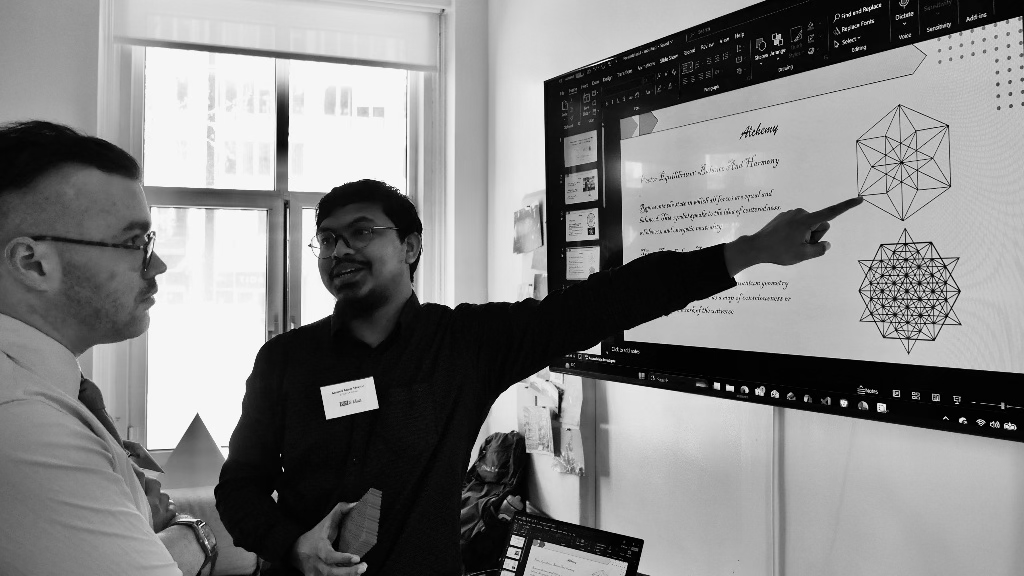
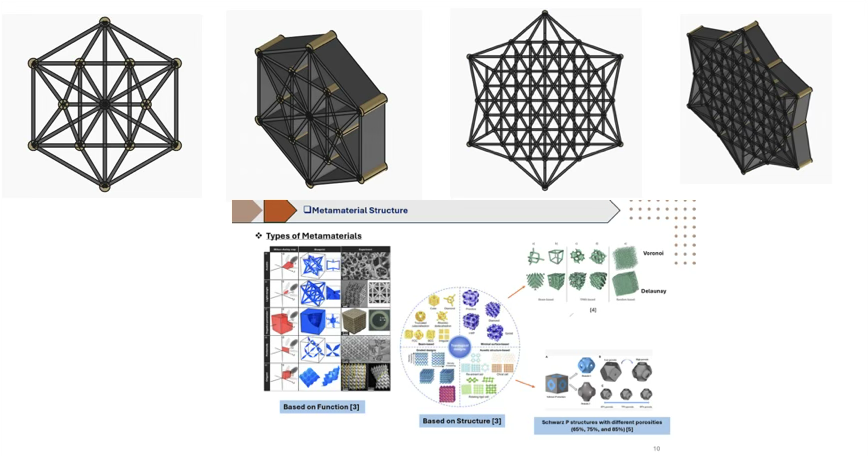
The way to achieve this through my research and discussion with experts and through unconstrained brain storming with research fellows in my cohort I found would be like unifying design of new “metamaterials” with the potential “to exploit the microbial intelligence”.
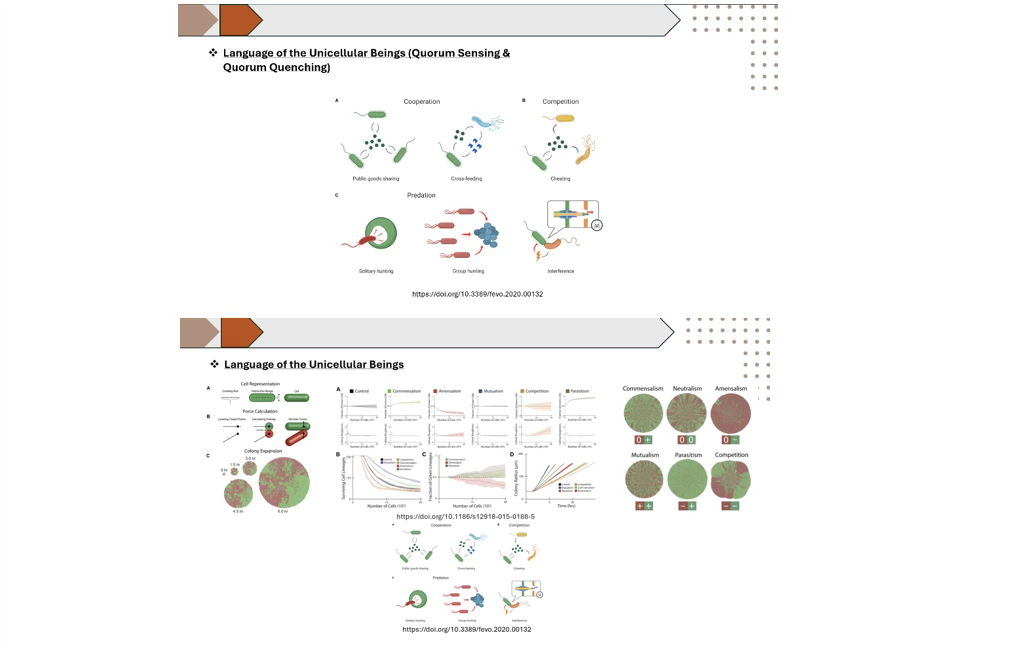
- Youtube Link to Quorum Sensing Phenomenon video: https://youtube.com/shorts/rXBSykTaUww?si=59WWnlWvEOhLgTy2
- Youtube Link to Nanokirigami (future metamaterial structure) design



.svg)